Decoding Multilingual Poker Tables: How Language Tools Affect Strategy Development and Free Play Options
Carlo Long · Jun 7, 2026

Decoding Multilingual Poker Tables: How Language Tools Affect Strategy Development and Free Play Options
Online poker platforms now host participants from dozens of language backgrounds in single sessions, which creates new layers of interaction that extend beyond card mechanics and betting patterns. Players encounter chat boxes filled with messages in Spanish, Mandarin, Russian, and other languages, while software developers respond by embedding translation features directly into table interfaces. Research indicates these tools reshape how participants interpret opponent intent, adjust their own communication, and prepare strategies before committing real stakes.
Language Barriers at the Virtual Felt
Tables labeled as international draw mixed fields where English serves as the default yet rarely becomes the sole language in use. Data from industry tracking services shows that in 2025 roughly 38 percent of active poker tables on major networks featured at least three distinct primary languages among seated players. Observers note that quick exchanges about hand strength or table dynamics often occur in native tongues, leaving non-speakers at an information disadvantage unless translation aids activate in real time.
Those who study player behavior point out that subtle cues in chat, such as timing of messages or choice of phrasing, lose accuracy once filtered through automated systems. A phrase meant as light table talk in one language can translate into something that appears aggressive or conciliatory in another, altering perceived table image. Strategy development therefore incorporates an extra step: assessing how translated text might misrepresent original meaning and adjusting responses accordingly.
Translation Tools and Tactical Adjustments
Modern poker clients integrate browser-based translators alongside dedicated in-app dictionaries that cover poker-specific terminology. Participants who activate these features receive instant renderings of chat and sometimes even pre-game lobby notes. Studies conducted by university research groups in Canada reveal that players using real-time translation report higher engagement with international fields, yet they also record more frequent misreads of bluff signals when idioms fail to carry over cleanly.
Strategy sessions for serious players now include practice with translated scenarios. One documented approach involves reviewing past hands where chat logs were translated post-session to identify patterns of misunderstanding. Trainers emphasize that while core mathematical elements remain constant, the social layer of the game shifts when language mediation enters the equation. Players learn to phrase their own messages in simpler structures that survive translation better, reducing the chance that intended meaning gets distorted.
Free Play Platforms and Language Accessibility
Free play modes on international sites function as testing grounds where language tools receive heavy use. These environments allow participants to experiment with translated chat without financial exposure, which accelerates familiarity with diverse playing styles. Figures released by the Australian Interactive Gambling Regulator indicate that free tournament participation from non-English primary speakers rose 22 percent between 2024 and 2025, coinciding with improved integration of translation modules.
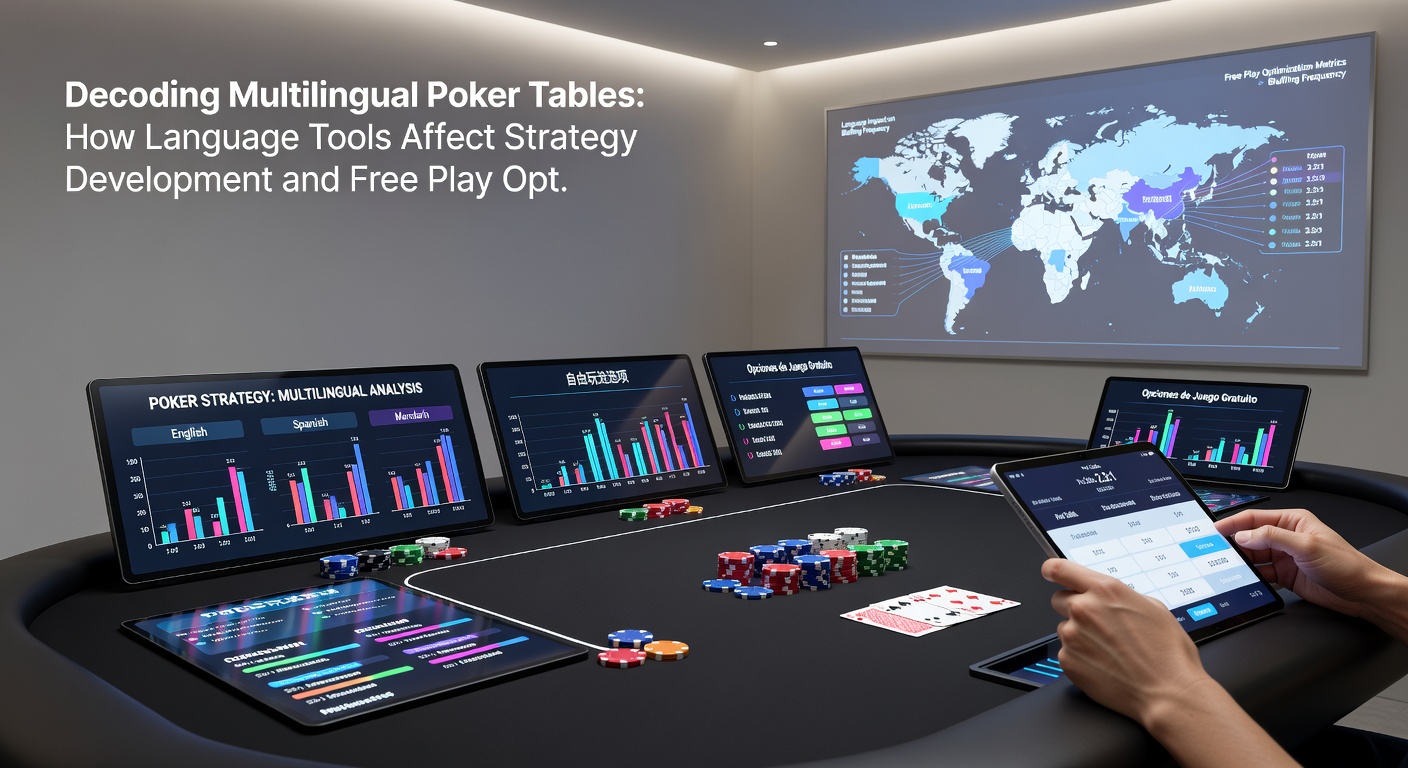
Developers have responded by adding language preference settings that automatically load compatible glossaries for poker terms. Free play users therefore encounter fewer barriers when switching between regional servers. This expanded access supports broader strategy testing, because participants can observe how opponents from different linguistic backgrounds approach similar stack sizes and position scenarios without the pressure of real-money outcomes.
Developments Expected by June 2026
Platform updates scheduled for release around June 2026 aim to incorporate context-aware translation engines trained specifically on poker dialogue corpora. Early documentation suggests these systems will flag potential idiom mismatches and offer alternative phrasings before messages post. Regulatory bodies in the European Union have begun reviewing standards for such tools to ensure they do not inadvertently create unfair information asymmetries at the tables.
Free play sections are expected to receive the same upgrades first, giving users extended periods to adapt before the features migrate to real-money environments. Analysts tracking adoption rates anticipate that these changes will further normalize multilingual tables as standard rather than specialized offerings.
Conclusion
Language tools now form an integral component of how poker strategy evolves on global platforms. They expand access to free play environments while simultaneously introducing new variables that players must account for during hand analysis and table interaction. As translation technology continues to advance through 2026, participants who integrate these resources into their preparation routines gain clearer sightlines across linguistic boundaries, whereas those who overlook the nuances risk persistent miscommunication that affects decision quality over extended sessions.