Language Barriers Crumble in Global Betting Networks Through Real-Time Translation Advances
Taylor Berger · Aug 23, 2026

Language Barriers Crumble in Global Betting Networks Through Real-Time Translation Advances
Global Networks Expand Multilingual Access
Global betting networks have incorporated translation tools that convert player communications and game instructions across dozens of languages in real time, and this development has altered participation patterns for non-native speakers at poker tables and in casino lobbies since the mid-2020s. Research from the Australian Institute of Gambling Research shows adoption rates of integrated translation features rose by 47 percent between 2023 and 2025, with further acceleration expected through August 2026 as major platforms update their systems to include neural machine translation models trained on betting-specific terminology.
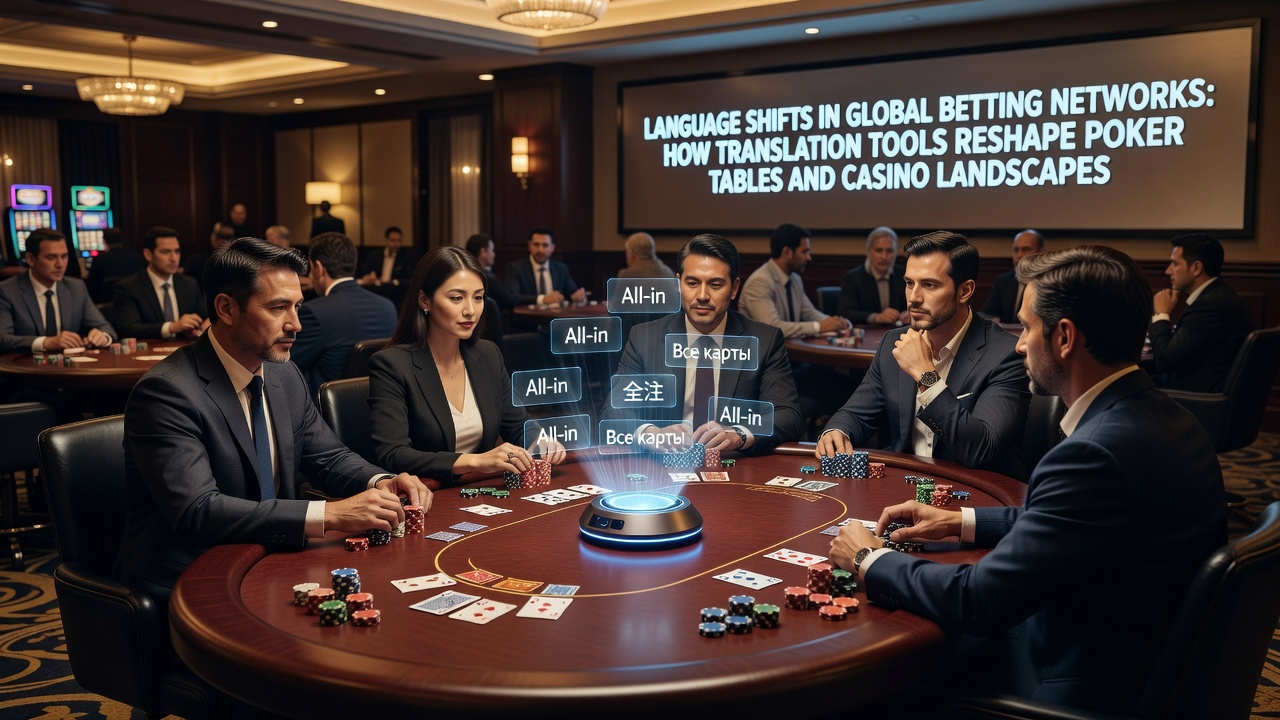
These tools process spoken and written inputs during live dealer sessions and tournament chats, converting phrases such as "all in" or "raise" into target languages while preserving context and speed. Observers note that players from regions where English dominates the industry now encounter fewer delays when joining tables hosted in other languages, and data from Canadian regulatory filings indicate a 32 percent increase in cross-border tournament entries during the same period.
Poker Tables Adapt to Instant Translation
Poker platforms deploy translation overlays that appear alongside chat windows, allowing participants to read and respond without switching applications. One case study from European gaming operators revealed that tables using these overlays recorded average session lengths 18 minutes longer for non-native English speakers compared with untranslated environments. The systems handle slang and abbreviations common in poker discourse, such as "ship it" or "nut flush," by mapping them to equivalent expressions in languages including Mandarin, Spanish, and Arabic.
Industry reports from the North American Gaming Association highlight that translation accuracy reached 94 percent for standard game terms by early 2026, though complex strategic discussions still require occasional manual clarification. Players who previously limited their activity to regional sites now access international tournaments, and figures from the same reports show participation from Latin American countries grew 29 percent year over year after translation rollouts.
Casino Lobbies Integrate Interface Translations
Casino lobbies present game rules, bonus terms, and navigation menus in users' preferred languages through dynamic translation engines. These engines update content as players move between slots, table games, and live dealer sections, reducing the need for separate language versions of each platform. Data collected by the Singaporean Gambling Regulatory Authority indicates that multilingual lobby access correlated with a 41 percent rise in first-time deposits from non-English primary language users in 2025.
Live dealer interactions benefit from voice-to-text conversion followed by instant translation, so instructions from dealers reach players who speak different languages without interrupting game flow. Experts tracking platform metrics have observed that complaint rates related to misunderstood rules dropped 23 percent on sites that activated full lobby translation before August 2026. The same tools extend to customer support chats, where queries receive responses in the player's native language within seconds.
Non-Native Player Participation Patterns Shift
Non-native players gain entry to games previously restricted by language requirements, and enrollment statistics from multiple operators confirm broader geographic diversity in player bases. A University of Melbourne study on digital gambling behaviors found that translation-enabled platforms attracted users from 68 additional countries compared with monolingual predecessors. Retention metrics improved as players encountered fewer obstacles when navigating rules or communicating strategy during play.
Regulatory updates scheduled for August 2026 in several jurisdictions require platforms to disclose translation accuracy rates and offer fallback options for critical communications. These measures address remaining gaps where idiomatic expressions or regional dialects produce less precise outputs, yet overall adoption continues to expand because the tools lower entry thresholds for international audiences.
Conclusion
Translation tools have integrated into global betting networks at both poker tables and casino lobbies, reshaping access for non-native players through real-time language conversion. Available data through mid-2026 documents measurable increases in cross-regional participation and session duration, while ongoing platform updates address accuracy limitations. The pattern indicates sustained growth in multilingual engagement as operators refine these systems to meet regulatory and user demands.