Localization Strategies That Expand Access to Virtual Table Game Environments
Carlo Long · Jul 31, 2026

Localization Strategies That Expand Access to Virtual Table Game Environments
Virtual table game environments rely on precise language localization to reach users across different regions, and companies implement these strategies to convert interfaces, rules, and interactions into local languages while preserving gameplay mechanics. Data from industry reports shows that platforms adopting comprehensive localization see increased participation from non-English speaking markets, because users engage more readily when instructions, chat functions, and betting options appear in their native tongues. Observers note that the process involves more than simple translation, since cultural nuances, idiomatic expressions, and regional terminology must align with the original content to avoid confusion during fast-paced sessions like poker or blackjack variants.
Core Techniques in Language Adaptation
Developers begin with linguistic audits that identify every text element in a game, from menu labels to error messages, then apply translation memory tools to maintain consistency across updates. Research indicates that using machine-assisted translation followed by human review produces higher accuracy rates than either method alone, particularly when handling specialized terms such as "flush" or "straight" that carry specific meanings in card games. Teams often integrate right-to-left script support for languages like Arabic and Hebrew, while testing font rendering to ensure symbols remain legible on various screen sizes. Those who have studied these workflows find that modular code structures allow quick swaps of language packs without disrupting core game logic, which keeps maintenance costs lower over time.
Audio localization adds another layer, where voiceovers for dealers or narrators get recorded in target languages and synchronized with animations. Figures reveal that platforms offering dubbed audio alongside subtitles report higher session durations in markets where spoken language differs from written forms. Experts have observed that cultural adaptation extends to visual elements too, such as replacing card backs or table designs with region-appropriate motifs to foster familiarity without altering rules.
Accessibility Gains Through Localized Interfaces
Language localization directly supports accessibility standards by reducing cognitive load for users who struggle with dominant languages in digital spaces. Studies show that clear, native-language prompts help players with reading difficulties or those new to online formats navigate rules and controls more effectively. In July 2026 several platforms rolled out enhanced localization features aligned with emerging digital accessibility guidelines, including dynamic text scaling and voice-command integration that works across multiple languages. People often find that these updates lower error rates during gameplay, because instructions no longer require mental translation that can lead to missteps in timing-sensitive decisions.
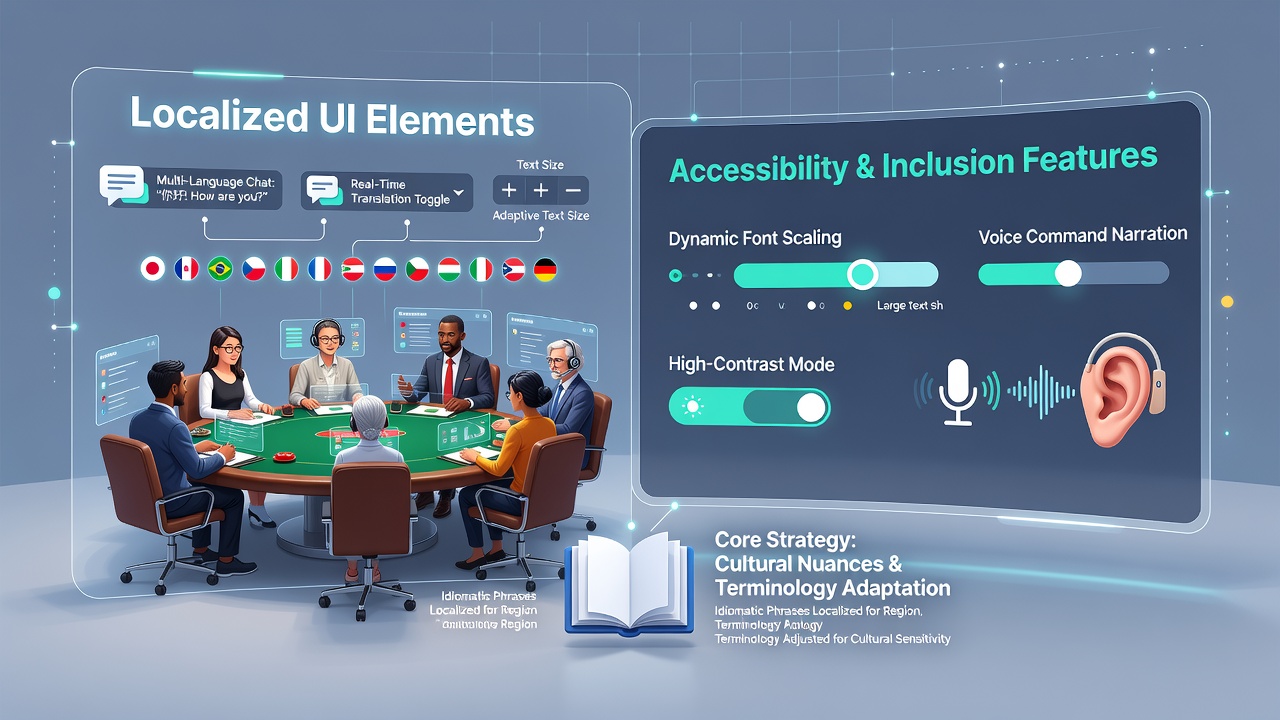
Regulatory bodies in various regions encourage such adaptations as part of broader digital inclusion efforts. One example comes from the European Commission's digital accessibility framework, which highlights language support as a factor in equitable access. Similar approaches appear in Canadian accessibility research, where reports emphasize multilingual interfaces for public digital services including entertainment platforms. Industry organizations like the International Game Developers Association have published guidelines that stress testing localized versions with diverse user groups to catch issues early.
Implementation Challenges and Solutions
Scaling localization across dozens of languages presents logistical hurdles, including version control and real-time updates when games receive new features. Data shows that centralized content management systems help teams track changes and push updates simultaneously to all language variants, reducing delays that could frustrate users. Yet synchronization becomes critical during live events or tournaments, where announcements must appear instantly in every supported language to keep everyone informed. Researchers discovered that combining automated quality checks with native-speaker feedback loops catches most discrepancies before release, though occasional edge cases still require manual fixes.
Technical integration with game engines demands careful planning, because dynamic elements like player names or chat messages must handle special characters and varying text lengths without breaking layouts. Those who've examined successful implementations note that flexible UI designs accommodate these variations through responsive containers and adjustable spacing. Cost considerations also factor in, as initial investments in professional translation and testing yield returns through broader market penetration over successive quarters.
Measuring Impact on User Engagement
Analytics platforms track metrics such as time spent in localized sessions versus non-localized ones, revealing patterns that guide future refinements. Evidence suggests retention improves when players encounter familiar language structures, particularly in regions with lower English proficiency. Academic sources, including reports from research institutions examining digital media consumption, confirm that language barriers represent a primary obstacle to sustained use of interactive environments. By addressing these barriers through targeted localization, developers create pathways for wider participation while maintaining consistent rule enforcement across all versions.
Conclusion
Language localization strategies continue to shape how virtual table game environments serve diverse audiences by combining technical precision with cultural sensitivity. Ongoing developments as of July 2026 demonstrate that these approaches expand accessibility when integrated thoughtfully into design and maintenance processes. Platforms that prioritize accurate, context-aware adaptations position themselves to connect with users who might otherwise face exclusion due to language differences, and the resulting data supports continued refinement of these methods across the sector.